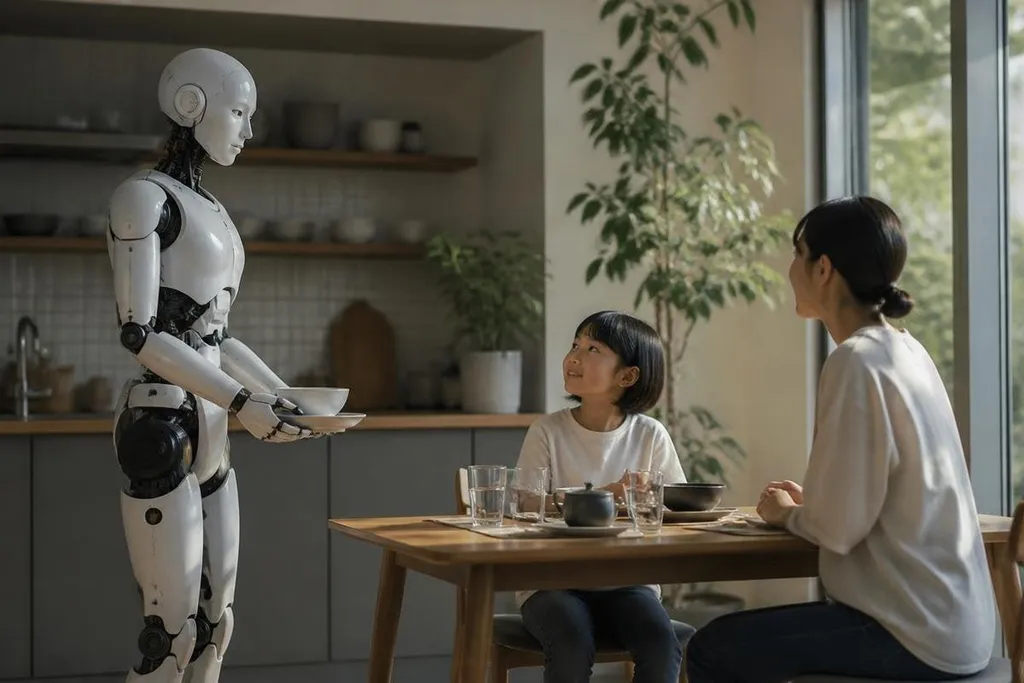
Humanoid robots copy parts of the human body: a head, torso, arms, hands, and legs. That shape could affect more than factory work, because people often judge a machine by how closely it looks and moves like them.
If humanoid robots enter homes, offices, and public spaces, they may change how people think about work, care, skill, and even the meaning of being human.
- Human-shaped machines could make some tasks feel less personal.
- Their social role will depend on behavior, limits, and who controls them.
A familiar body changes the first reaction
People already use machines with names, voices, and faces. That human shape adds a body that fits familiar human spaces. It can reach shelves, use stairs, hold tools, and work at benches built for people.
That fit may make the robot easier to place in a home or workplace. It may also make people expect human behavior from a system that has no human feelings, needs, or personal history.
The gap matters. A robot can copy a smile without feeling happy. It can answer a question without understanding the person in the same way another person would. If its body looks familiar, those limits may become harder to notice.
Work could shape status and self-worth
Many jobs involve repeated lifting, sorting, checking, or carrying. A humanoid robot could take on some of those tasks if its sensors, balance, battery, and hands work well enough for the setting.
The effect on identity would reach beyond wages. People often connect work with skill, routine, pride, and their place in a team. If a machine takes over a task, a worker may lose part of that daily role even when the task itself was tiring.
That change won't affect every job in the same way. A robot may do the physical motion while a person sets the task, checks the result, repairs the system, or handles unusual cases. Those jobs would need training and clear responsibility, not vague promises about new roles.
A humanoid task deserves evidence from a real setting, not a product clip. Dated humanoid robotics reporting from Robot24.com can name the model, test site, task, and human handoff, so you can judge what the machine changes before the discussion turns to care and trust.
Care and trust carry a heavier burden
In elder care, education, or home support, a humanoid robot would enter private parts of life. Its body could help it carry objects or move through rooms.
Trust would depend on what it records, who sees that data, and how often a person can stop it. A machine that reminds someone to take medicine has a different duty from one that lifts them from a chair.
The second task involves weight, balance, contact, and a real risk of injury. Human-shaped design may make people forget that software can fail and hardware can break.
The robot's role should stay clear. People need to know when they are speaking with a machine, what the machine can decide, and when a human must take over. A polite voice cannot replace those rules.
The body could change how people see themselves
Humanoid robots may also affect ideas about strength, movement, and appearance. A machine that lifts more than a person could change how people judge physical ability. A machine that repeats a dance or gesture may change what people see as a human skill.
That shift could bring relief for people who need physical support. It could also create pressure if companies or schools treat machine-level speed and output as a normal human target.
I think the main risk is treating a human shape as proof of a human mind. The body can make a robot easier to use, but it doesn't give the robot judgment, care, or responsibility.
A practical test for humanoid robots
Before accepting a humanoid robot in a workplace or home, check these points:
- Task fit: Name the exact job, object weight, room layout, and speed the robot must handle.
- Human control: Set a clear stop method and name the person who can use it.
- Data limits: Record which cameras and microphones run, where data goes, and when it is deleted.
- Failure plan: Test what happens after a sensor error, loss of power, blocked path, or dropped object.
- Role clarity: Tell people which decisions belong to the robot and which require a human.
These checks keep the discussion tied to conduct rather than appearance. Trust comes through repeatable work, clear limits, and accountable owners.
The first sign of social change won't be a robot that looks perfectly human. It will be the moment people start judging themselves by what the machine can do, and the answer to that pressure will depend on the rules built around it.